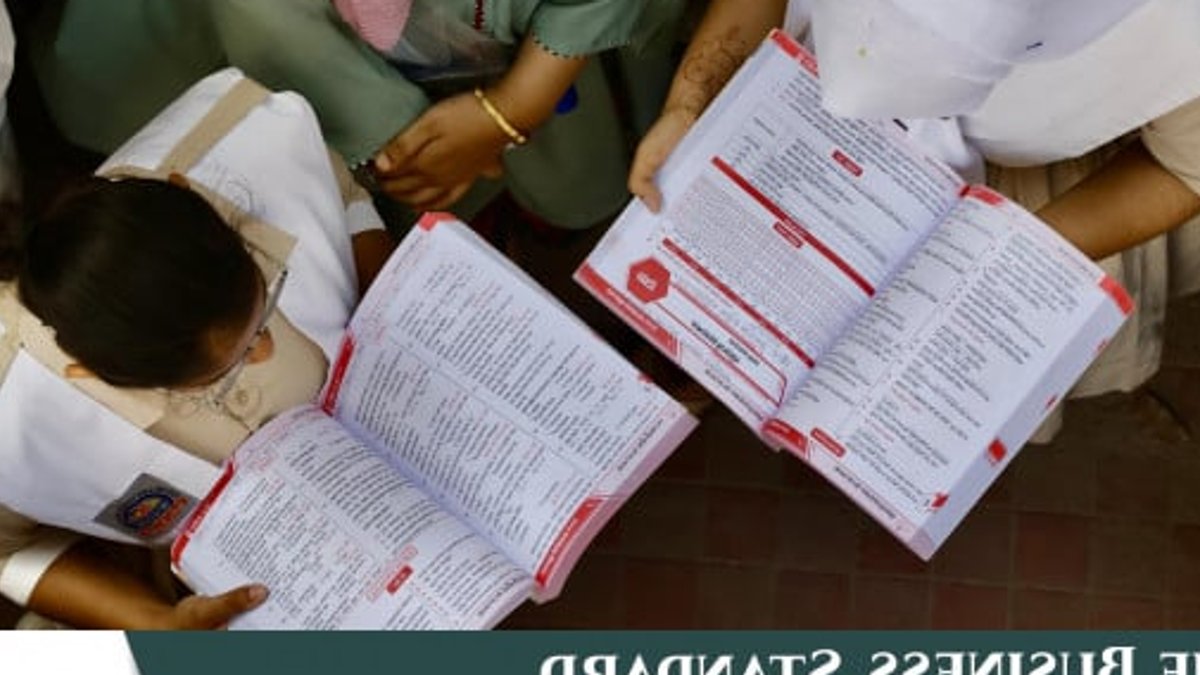
Bangladesh’s secondary school certificate (SSC) pass rate fell to 62.25% this year, the lowest level in 19 years, sparking debate over the reasons behind the sharp decline.
Curriculum shifts and exam format changes
Students this year faced a return to conventional written examinations after a three‑year period of competency‑based assessment. In 2022, the education system introduced a practical and continuous‑assessment model for secondary students, emphasizing projects and skill‑based tasks rather than traditional exams.
The same cohort did not sit for the Primary Education Completion (PEC) exam in Class 5 because of pandemic‑related school closures.
When the government reinstated a written‑exam‑focused system for the SSC in 2026, teachers reported difficulty adapting lesson plans. “Because they had never sat for a board examination before and were accustomed to a practical‑based curriculum, some students may have struggled to adapt to the new written examination system,” said Urmi Islam Ema, a teacher at Engineering University School and College.
Another educator, Majeda Mujib of Tejgaon Government Girls’ High School, highlighted the compounded effect of the pandemic and curriculum changes. “At the same time, teachers were not adequately prepared for the new curriculum,” she said, adding that students found it hard to adjust when the system reverted to written and creative examinations.
Related: Metro 5 budget slashed by Tk2,217cr
The shift back to textbook‑centered learning means students will now be “fully classroom‑oriented,” according to Ema, who stressed the need for stability in the education system.
Learning loss and teaching quality
Experts argue that curriculum changes alone do not explain the decline. Professor Dr SM Hafizur Rahman of Dhaka University’s Institute of Education and Research pointed to broader issues: “The condition of teaching in schools and teachers’ skills also need to be analysed. Our research shows that the quality of classroom teaching is not satisfactory. In terms of teacher competency, we often find only around 60% of teachers to be adequately qualified.”
Education Minister ANM Ehsanul Hoque Milon acknowledged systemic challenges, stating, “We are working with a fragile education system. Over the past 20 years, we have fallen further behind. The shortage of teachers is alarming.”
Data from the 11 education boards show the average pass rate across this year’s SSC and equivalent examinations was 62.25%, the lowest in 19 years since the 57.37% recorded in 2007. The pass rate stood at 88.29% in 2016, meaning it has fallen by 26.04 percentage points over the past decade.
From a practical standpoint, the lower pass rate may signal that many students are now encountering a more rigorous assessment environment.
Related: Rural areas see shift in job market
While some view this as a sign of reduced irregularities, the abrupt policy swings could be leaving learners and teachers scrambling to meet divergent expectations.
Calls for systematic research and policy stability
Stakeholders such as the Dhaka Secondary and Higher Secondary Education Board chairman, Syed Akhtaruzzaman, defended the integrity of this year’s exams, noting they were conducted under “special supervision of the education minister” and that “students received their results through a properly conducted examination process.”
Despite these assurances, the consensus among teachers and analysts is that frequent changes to curricula and assessment methods hinder consistent learning outcomes.
As the system settles back into a more traditional examination model, the hope is that both educators and students will have clearer expectations and that future pass rates may stabilize.