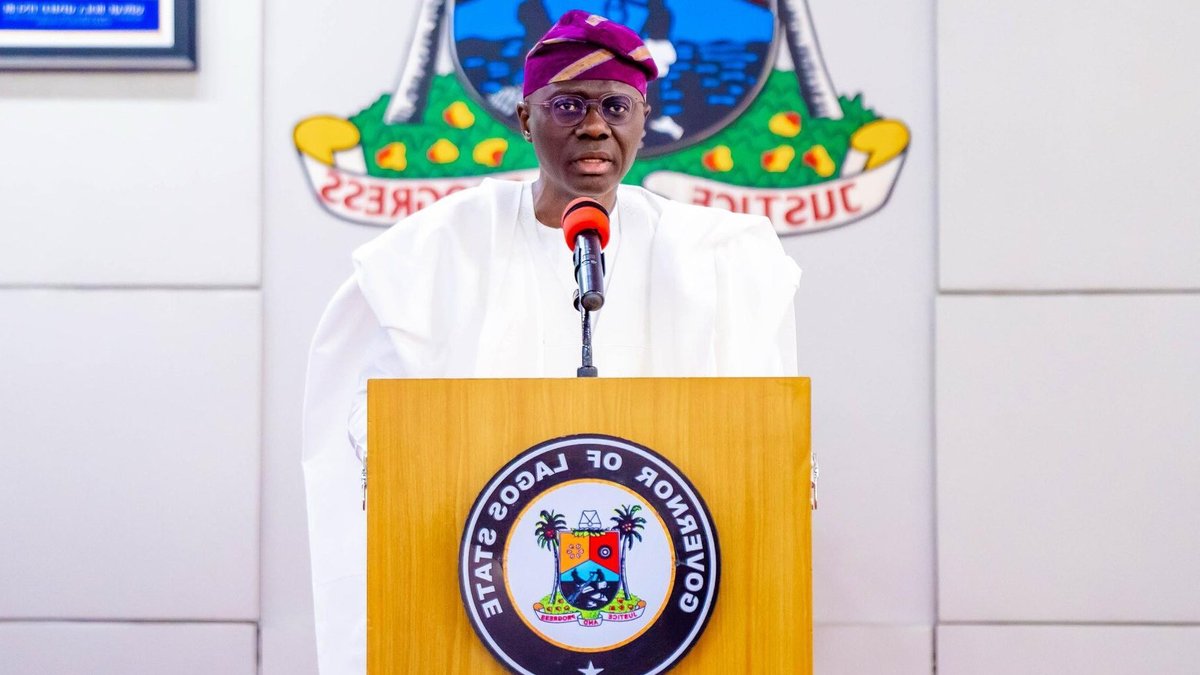
The Lagos State Government has introduced the Lagos State Industrial Policy (LSIP) 2025–2030, a strategic framework aimed at raising the manufacturing sector’s contribution to the state’s real GDP to 10.2% by 2026. The policy was unveiled at the 59th Annual General Meeting of the Manufacturers’ Association of Nigeria (MAN), Ikeja Branch, held at the Radisson Blu, Ikeja.
The LSIP is built around six core pillars focused on strengthening the industrial base, improving the business environment, developing MSMEs, providing infrastructure, advancing skills, and promoting innovation and sustainability. Lagos State Commissioner for Commerce, Cooperatives, Trade and Investment, Folashade Bada Ambrose-Medebem, described the LSIP as the most consequential industrial framework Lagos has produced in a generation. She emphasized that the success of the policy depends on implementation rather than the document itself.
Related: Firms face huge cost of agent turnover
“Policies alone do not build factories. Policies alone do not create jobs,” Ambrose-Medebem stated. She added, “What transforms a Policy from paper to prosperity is implementation.” The commissioner noted that the LSIP translates Federal priorities into state-level actions through clear implementation mechanisms, timelines, and accountability frameworks.
The policy includes several delivery instruments designed to streamline operations. These include regulatory and administrative reforms to reduce the time required to start, operate, and expand industrial enterprises. The government plans to use one-stop investor facilitation and fast-tracked approvals to achieve this. Other measures involve the expansion and optimisation of industrial clusters in Ikeja, Apapa, Ilupeju, and the Lekki Free Zone Manufacturing Corridor.
A financial support mechanism is also part of the package. The Lagos Industrial Development Fund and the LASMECO Partnership with the Bank of Industry aim to provide qualifying small businesses with single-digit, non-collateralised credit. Additionally, the Lagos State Export Readiness Programme (LASERP) will support qualified firms in transitioning from informal operations to AfCFTA-grade exports.
Related: Metro 5 budget slashed by Tk2,217cr
Challenges Facing Local Manufacturers
The policy’s reception among local manufacturers was mixed, with concerns about existing operational hurdles. MAN Ikeja Branch Chairman, Thomas Osobu, welcomed the policy direction but identified several challenges that continue to constrain productivity. He cited policy inconsistency, multiple taxation, foreign exchange volatility, and escalating energy costs as major issues. Osobu also noted that inadequate infrastructure remains a significant barrier.
Osobu called for constructive dialogue between the government and manufacturers to ensure policy reforms are consistently implemented. He argued that well-conceived and consistently implemented reforms could unlock industrial productivity, stimulate investment, encourage innovation, create quality employment, and position Nigeria as a globally competitive manufacturing hub.