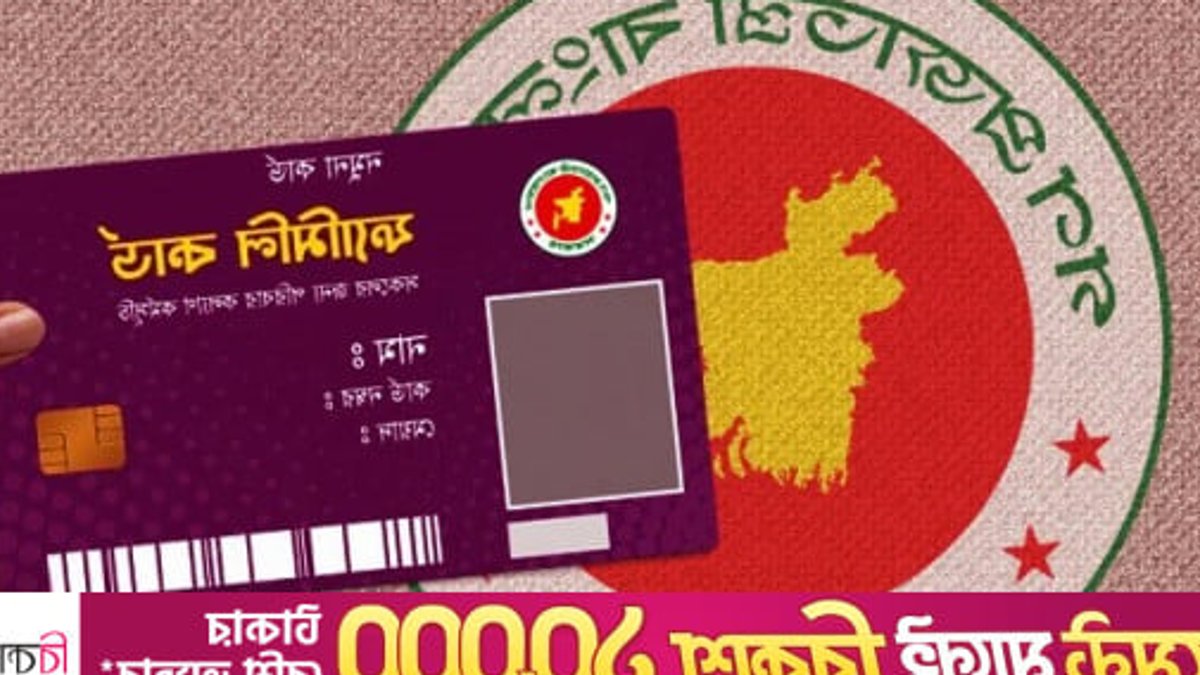
The government will officially launch its Family Card programme on 16 August, targeting 1.6 crore families within four years. This initiative aims to improve transparency in social safety nets by establishing a single, regularly updated database of poor and vulnerable households.
According to the report, a Dynamic Social Registry will track household socio-economic changes, allowing the government to regularly update information on households based on changes in their socio-economic conditions.
Social Welfare Minister AZM Zahid Hossain made the announcement after a meeting of the Cabinet Committee on the Family Card, chaired by Finance Minister Amir Khosru Mahmud Chowdhury. The minister said the Family Card would operate through the Dynamic Social Registry.
Prime Minister Tarique Rahman is scheduled to inaugurate the programme on 16 August in Ward No. 8 of Latifabad Union under Kishoreganj Sadar upazila. They plan to expand the programme to all upazilas and unions across the country in phases by the end of October.
Zahid said beneficiary data would be verified at the union level to ensure eligible households are included while preventing ineligible people from receiving benefits. He added that no one would be included or excluded on the basis of religion, ethnicity or political affiliation.
The minister said the initiative aims to address long-standing weaknesses in beneficiary selection by ensuring greater transparency, accountability and accuracy. He expressed hope that the programme would contribute to women’s economic empowerment and help reduce rural poverty.
Experience from existing social safety net programmes showed that financial assistance provided to women was more likely to be spent on children’s education, nutrition and healthcare, as well as on income-generating activities such as poultry farming, tailoring, cottage industries and small businesses.
Related: Cities Accelerate Repairs to Stop Water Leak Crisis
The pilot programme, conducted in 56 areas, produced encouraging results. Although data collection problems were identified in two pilot areas in Jashore and Netrakona, those issues have since been resolved.
Nationwide data collection under the new system will begin on 16 August using a revised questionnaire and a fully digital process. Household information will be updated every month to reflect deaths, changes in economic status and other developments.
To ensure transparency, the government has introduced a three-tier monitoring mechanism. Under the system, first-class government officials will supervise data collection at the union level, while committees led by upazila nirbahi officers, deputy commissioners and divisional commissioners will oversee implementation at the upazila, district and divisional levels respectively.
A national committee headed by the finance minister will monitor overall implementation, while the prime minister will receive regular progress updates. The minister said the Cabinet Division and the Ministry of Finance would cross-check data to prevent duplicate enrolment across social safety net programmes.
They will conduct independent evaluations to assess the programme’s effectiveness in reducing poverty. The Family Card programme was one of the government’s key election pledges, and its success will be closely watched in the coming years.
It will help.