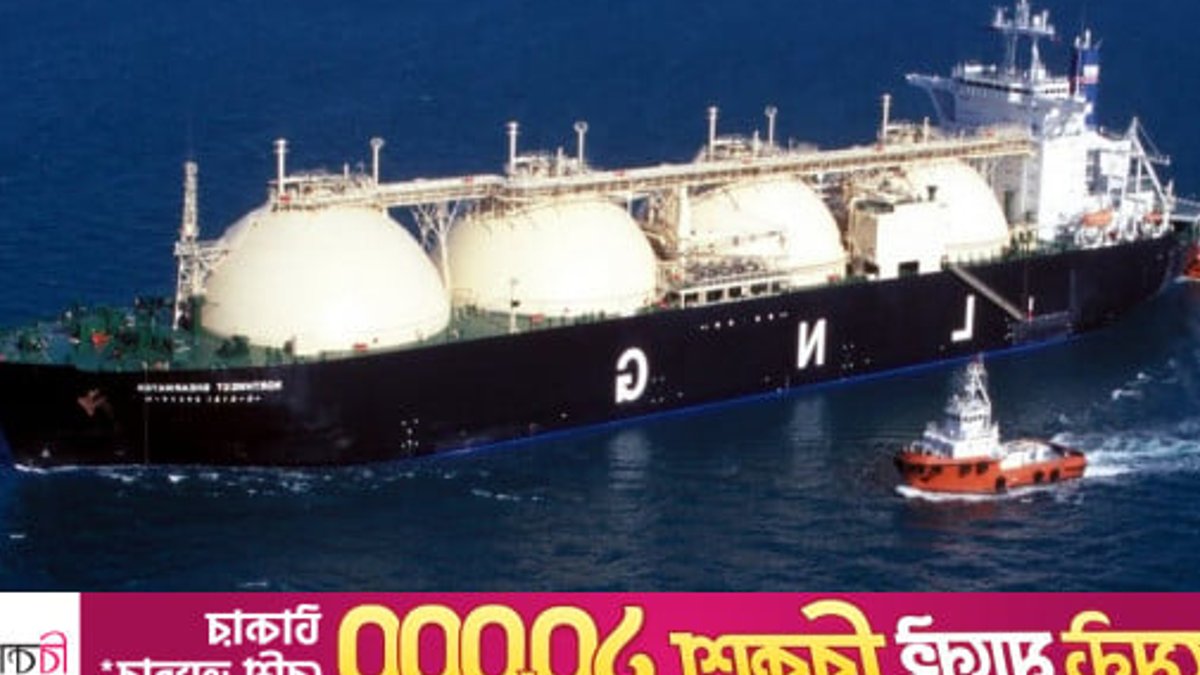
Bangladesh has paused a plan to secure a new long-term supply of U.S. liquefied natural gas after the commodity trader behind the proposal demanded prices higher than the government was willing to pay. The Cabinet Committee on Economic Affairs approved a 13-year agreement with Gunvor USA LLC in late July, but the deal has stalled at the next stage of approval due to the company’s high quotation. This move comes as the nation faces growing uncertainty over supplies from its existing long-term suppliers following the Iran-U.S. conflict and disruptions around the Strait of Hormuz.
Disrupted Supply Chain
Officials have reported that QatarEnergy, Bangladesh’s largest LNG supplier, has recently informed the government that it may deliver only around half of its contracted cargoes in 2026. Under the 2026 Annual Delivery Plan, QatarEnergy was scheduled to supply 40 of the 115 planned cargoes, while Oman’s OQ Trading was due to deliver 16. The disruptions forced Bangladesh to rely more heavily on spot LNG purchases as prices surged to more than twice their pre-war levels, significantly increasing import costs.
Related: How Urban Convenience Enhances Residential Living in Singapore
Although the Strait of Hormuz has since reopened, Energy Division officials believe global LNG supplies could remain tight for another three to five years because of damage to regional LNG infrastructure and the slow recovery of export capacity. The situation created an urgent need for Bangladesh to secure replacement volumes well in advance of the 2028 expiry of its agreement with OQ Trading. This pressure pushed the government to pursue a government-to-government arrangement with Gunvor, which would have supplied five LNG cargoes in 2026, six in 2027, and three in 2028.
Pricing Disagreement
The proposal eventually forwarded to the Cabinet Committee on Government Purchase carried a higher price than Gunvor’s initial quotation, prompting the government to seek a lower index-linked price. Energy officials noted that Gunvor had initially proposed a price of JKM plus $0.10 per MMBtu. After negotiations, the company agreed to lower the Henry Hub multiplier to 121% and the premium to $5.20 per MMBtu for the period from 2029 to 2038. However, it raised the JKM-linked price for the 2026-28 period from the initial proposal to JKM plus $0.875 per MMBtu.
Related: Exness Compliance Specialist Named Vanuatu Stablecoin Commissioner
Petrobangla officials explained that Gunvor increased the JKM-linked price because of the tight LNG supply outlook for 2026-28, while agreeing to a lower Henry Hub-linked price for the period from 2029. This strategy reflects the expectation that global LNG prices will ease as a large number of new LNG infrastructure projects come into operation. The proposed Gunvor deal has gained urgency as the country faces growing uncertainty over supplies from its existing long-term suppliers.
Gunvor is taking the opportunity as very few companies in the world want to enter into long-term LNG deals now, according to a Petrobangla official. Energy Division officials said they are trying to bring down both the index-linked premium and the Henry Hub multiplier, but Gunvor appears unwilling to make significant concessions in the current tight market. The higher multiplier proposed under the Gunvor deal reflects tight global LNG supplies following damage to LNG processing infrastructure in the Middle East, which has strengthened sellers’ bargaining power. Long-term US LNG contracts are typically linked to around 115% of Henry Hub, along with a fixed liquefaction charge of roughly $5-$6 per MMBtu, making the 121% multiplier somewhat higher than the industry norm. The proposed deal also faces scrutiny compared to recent agreements made by neighboring India. Gujarat State Petroleum Corporation signed a 10-year LNG supply agreement with TotalEnergies, with deliveries due to begin in 2026, set at 119% of Henry Hub plus $4.40 per MMBtu.
Related: Shelters Protect Haor Communities From Lightning Strikes
Alongside the proposed Gunvor agreement, Bangladesh is exploring short-term LNG procurement from non-traditional suppliers to diversify its import sources. Countries under consideration include Australia, Brunei, Indonesia, Malaysia, Azerbaijan, Kazakhstan, Angola, Nigeria, and Algeria. Energy officials said Indonesia, Nigeria, and Algeria currently appear among the most promising options for securing additional LNG supplies in the near term. Officials said securing substantial price concessions could be difficult under current market conditions, particularly following the attack on QatarEnergy’s Ras Laffan industrial complex and continued concerns over global LNG supply security. Although the signing of the supply purchase agreement with Gunvor remains on hold, the government continues to seek alternative ways to secure the 115 cargoes planned for 2026.