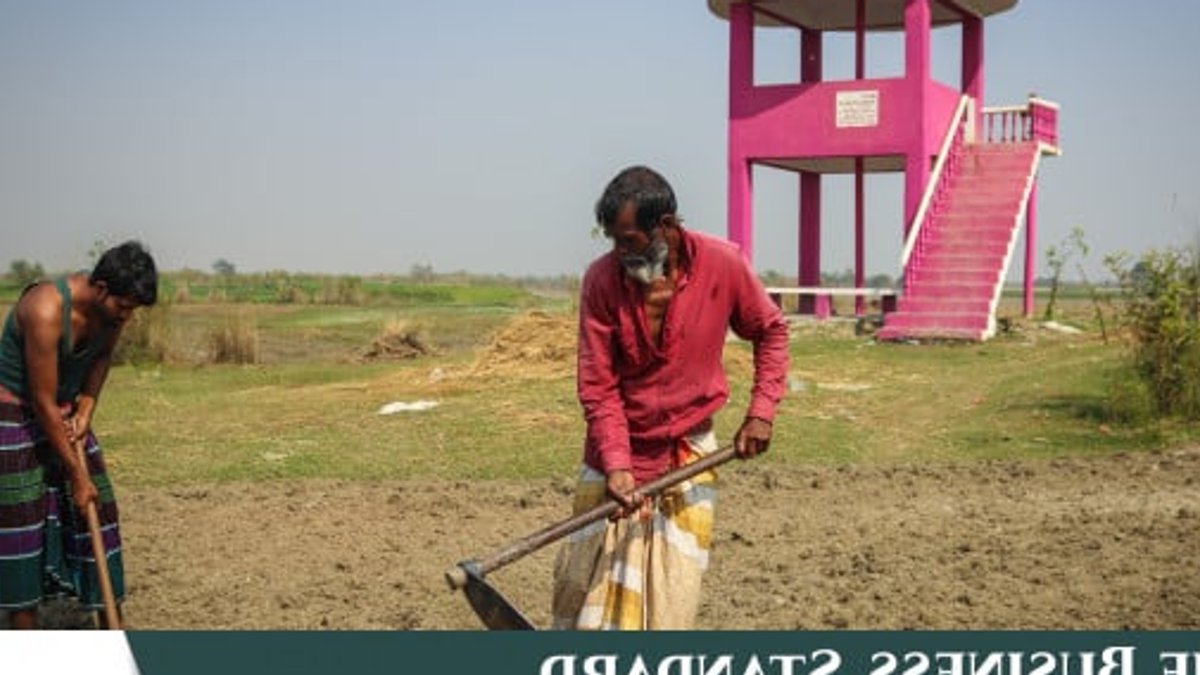
Lightning strikes kill around 300 people in Bangladesh every year, a fact that has remained tragically consistent for more than half a century despite progress in other disaster management areas. The Regional Integrated Multi-Hazard Early Warning System (RIMES) estimates that the country experiences nearly 3.36 million lightning flashes annually, with the northeastern districts of Sunamganj, Netrokona, and Sylhet bearing the greatest burden of fatalities. These areas are dominated by haors, large wetlands that flood during the monsoon. Farmers and fishers spend long hours working in these open spaces, often far from any trees or buildings, leaving them vulnerable to the sudden wrath of the sky god.
A shift in strategy
The government declared lightning a disaster in 2016 and launched a nationwide campaign to plant palmyra palm (taal) trees, hoping they would act as natural conductors to reduce risk. However, these trees take years to grow tall enough to provide meaningful protection, leaving communities exposed in the interim. To address this urgent need, Brac’s Disaster Risk Management Programme (DRMP) has constructed five lightning safety shelters across the country, four in Shalla and Dirai upazilas of Sunamganj and one in Sariakandi upazila of Bogura.
Brac DRMP found that previous efforts, such as those by the United Nations Development Programme (UNDP), were limited. The organization then engaged directly with affected communities to understand their experiences and identify practical ways to protect people. Through consultations, it became clear that the primary impact of lightning is the loss of human and animal lives, rather than damage to crops or homes. The group decided to build smaller shelters within walking distance of where farmers work, rather than large facilities that would require significant amounts of land.
Related: World Bank approves $250m to strengthen Bangladesh’s public institutions
The shelters utilize a two-storey design to handle the region’s seasonal flooding. The ground floor remains open to allow floodwater to pass through, while the upper level provides a safe refuge. People can reach the upper floor by boat even when the surrounding land is submerged. Each structure includes a tube well for drinking water, a staircase for safe access, and a wide roof to shield against wind-driven rain. Engineers equipped the shelters with lightning arresters connected to earthing systems, directing electrical current safely into the ground. Brac developed this design through extensive discussions with architects and engineers, creating an innovative pilot that combines engineering, disaster preparedness, and community participation.
Building on community support
Land acquisition presented a challenge, as the organization could not simply purchase property for every shelter. Brac DRMP Director Md Liakath Ali explained the strategy: they brought community members together to explain the project and asked if anyone would be willing to donate land for the greater good. The organization also highlighted that a successful pilot could lead to a replicable model across the country. After these discussions, many landowners voluntarily agreed to provide land. Unused patches along roads, where harvested crops are gathered and processed, became ideal locations for the shelters, allowing large numbers of people to take refuge quickly during a storm.
These facilities serve multiple purposes, offering a place to rest and access safe drinking water. In haor areas, where people often travel long distances through floodwaters, they can also moor their boats and take a break. Head of Programme Khondoker Golam Tawhid noted that while tree plantation remains a valuable long-term strategy, purpose-built shelters equipped with proper lightning arresters and earthing systems can provide immediate protection over a much wider area. Brac officials believe safety shelters offer a more practical short-term solution to the threat of lightning.