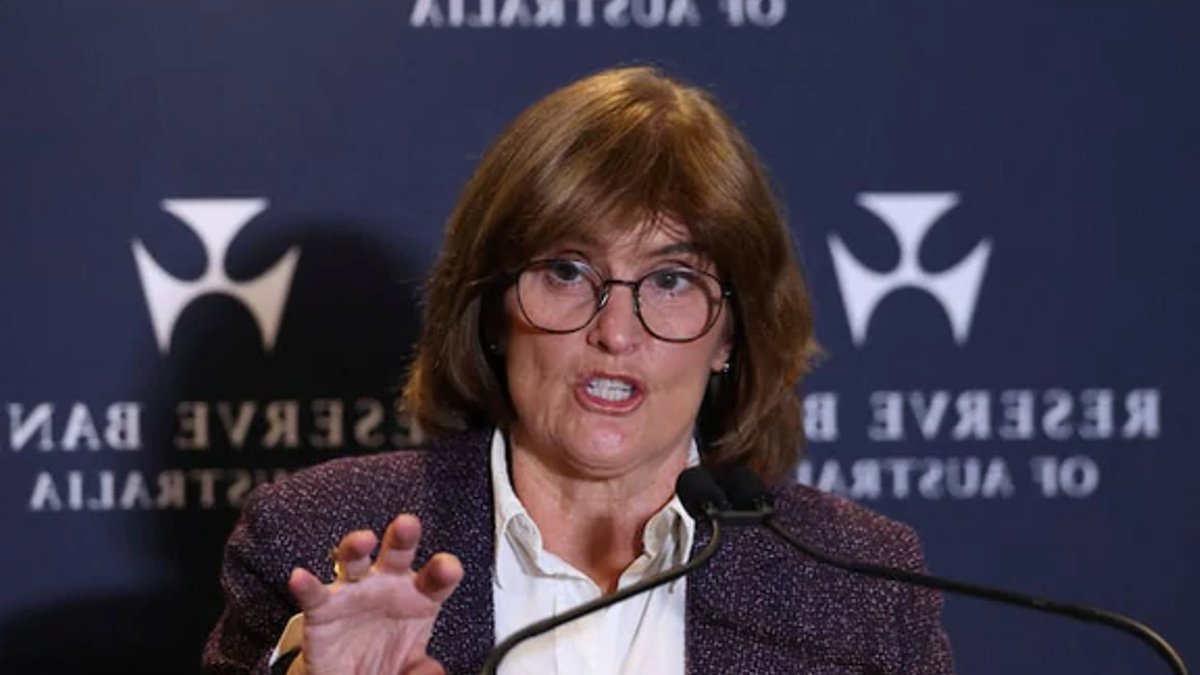
Michele Bullock, the Reserve Bank of Australia’s governor, told lawmakers that existing interest rates may prove insufficient to control inflation, leaving the door open for further increases. The central bank’s benchmark rate currently stands at 4.35%, its highest level since the pandemic, after remaining unchanged across two back-to-back meetings. Bullock acknowledged that recent economic developments could justify additional tightening.
The RBA’s concerns center on three escalating inflation threats: the ongoing Middle East conflict, a surge in global demand driven by artificial intelligence advancements, and severe weather disruptions. Crude oil prices have climbed sharply once again, directly increasing consumer expenses. The AI-driven expansion is straining supply chains for critical technologies, driving up costs for components already in short supply. Bullock said that while Australia’s economic growth is decelerating, some of these upside risks to inflation appear to be materializing. She noted that there is little sign of resolution of the Middle East conflict, and oil and related prices have increased sharply again, adding directly to inflation.
Financial markets now assign a 93% likelihood that the RBA will implement a fourth rate hike this year, potentially lifting the cash rate to 4.6% by its next policy meeting on September 28–29. Investment bank analysts at UBS project two more increases, pushing the peak rate to 4.85% by early 2027. Their outlook assumes a jump in headline inflation to 3.8% year-over-year in the third quarter, compared with 3.5% in July.
Business leaders have expressed rising worries that the RBA’s current measures may fail to rein in inflation, with many companies absorbing higher input costs and transferring them directly to consumers. A persistently tight labor market could intensify these cost pressures. Bullock observed that while the housing market has cooled more than anticipated, possibly reducing overall economic activity, financial stability risks remain contained, thanks to households’ robust savings reserves.
Declines in residential property prices have yet to trigger broader economic instability, but their potential effects on employment and inflation will be monitored closely. Bullock acknowledged that the housing market has softened more than expected, which could be a downside risk to economic activity, but financial stability risks from the drop in house prices are contained as borrowers have built up considerable savings buffers. She added that what matters for monetary policy is how changes in housing prices affect economic activity, the labor market, and ultimately inflation.